Have a Plan
Plan of Action: Pre-Hurricane/Storm Preparedness
Our partners at Pinellas County and Pinellas County Emergency Management provide carefully curated, reliable information covering every aspect of storm preparedness and recovery. Their resources include detailed checklists, flood zone guidance, and step-by-step planning for before, during, and after a storm. Because this information is developed and maintained by the County’s emergency experts, it is among the most reliable and trusted guidance available, ensuring property owners can make informed decisions that protect lives and property.
Listed below are important items to consider when preparing for a storm event. For the most comprehensive guide for storm preparations, visit Pinellas County's Hurricane Guide page or click the button to the right to view and/or download the guide.
1. Stay Informed
- Sign up for local emergency alerts (e.g., Alert Pinellas).
- Monitor weather updates from the National Hurricane Center (NHC) and local authorities.
- Download FEMA and local emergency management apps for notifications.
2. Know Your Flood Risk
- Click Know Your Zone to determine if your home is in a flood zone (e.g., Flood Zone A).
- Use Pinellas County’s interactive flood zone map to check your evacuation level.
- Review your flood insurance coverage—standard homeowner’s insurance does not cover flooding.
3. Create an Emergency Plan
- Identify your evacuation route and nearest shelter.
- Plan for transportation and lodging if evacuation becomes necessary.
- Assign roles for each family member (e.g., pet care, emergency bag preparation).
- Choose an out-of-town contact for check-ins if communication lines go down.
4. Prepare a Disaster Supply Kit
Ensure your kit includes:
- Non-perishable food (3–7 days)
- Drinking water (1 gallon per person per day)
- Flashlights and batteries
- First aid kit and medications
- Battery-operated radio or NOAA Weather Radio
- Important documents in waterproof bags (insurance, IDs, deeds)
- Cash (ATMs may be down)
- Phone chargers and backup power banks
- Sanitation items (wipes, trash bags, hygiene products)
- Waterproof boots and rain gear
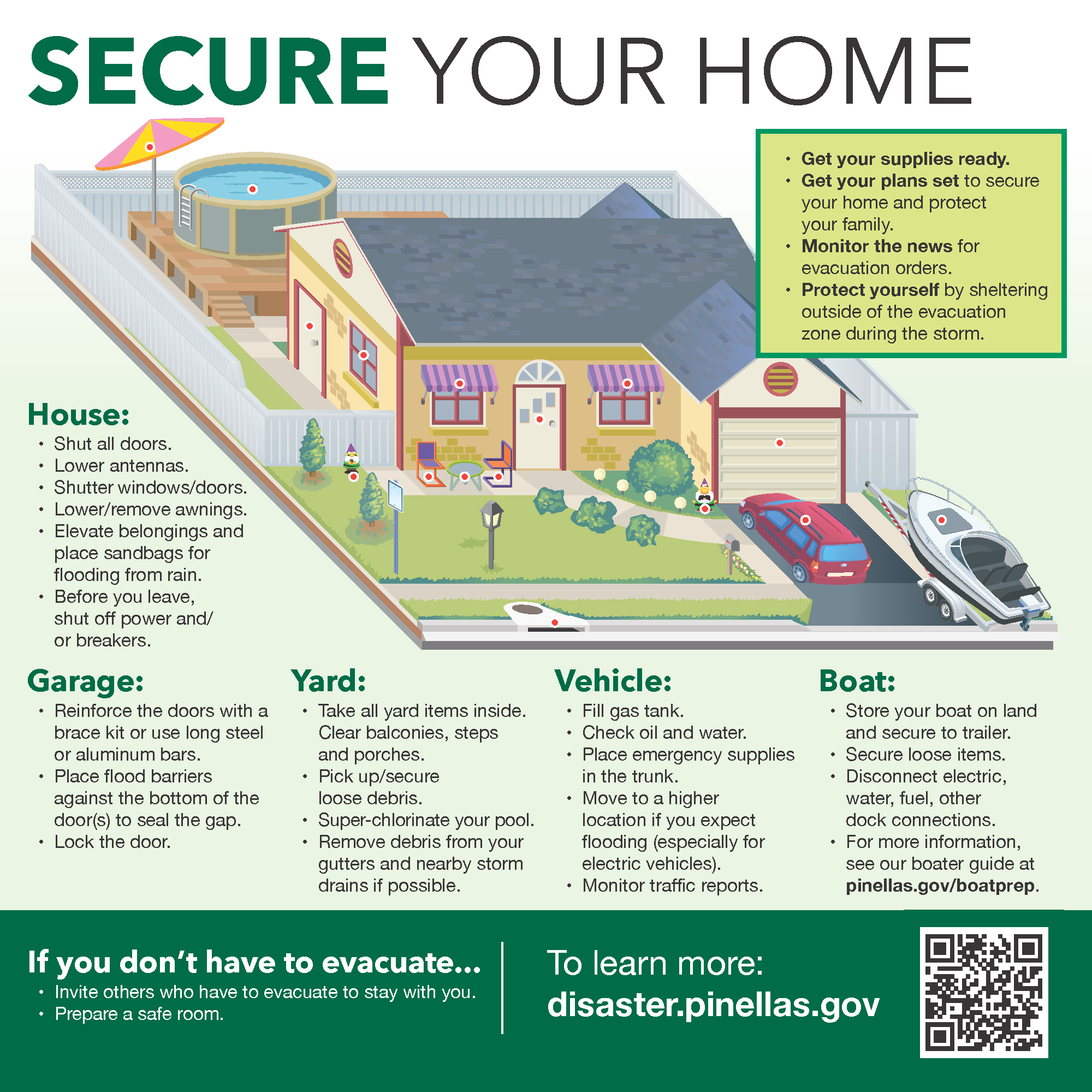
5. Prepare Your Property (click "Secure Your Home" image to view flyer)
- Clear drains, gutters, and downspouts.
- Secure outdoor furniture, planters, and garbage bins.
- Elevate valuables and electronics off the floor, especially in flood-prone areas.
- Place sandbags around doors and low entry points (check with the Town for availability).
- Trim trees and remove loose branches.
- Install flood barriers or shields if available.'
- For more tips on protecting your property, visit www.floodsmart.gov or read/download the FEMA Protect Your Property From Flooding (pdf) guide.
6. Protect Important Assets
- Back up digital files and photos.
- Move vehicles to higher ground or out of flood-prone zones.
- Take photos of your property for insurance documentation.
7. Consider Special Needs
- Register individuals with medical or functional needs with the Pinellas County’s Special Needs Shelter Program.
- Plan for pets: gather food, crates, and vaccination records (not all shelters accept animals).
8. Fuel Up and Charge
- Fill your vehicle’s gas tank and keep extra fuel if safe to store.
- Charge all mobile devices and rechargeable batteries.